
Hmindustry > News > News > IRWG Technical Session 2.0 Charts “Execution Decade” for Nigeria’s Industrialization with Stakeholders.
IRWG Technical Session 2.0 Charts “Execution Decade” for Nigeria's Industrialization as Stakeholders Agree on a 30/60/90-Day Implementation Matrix.
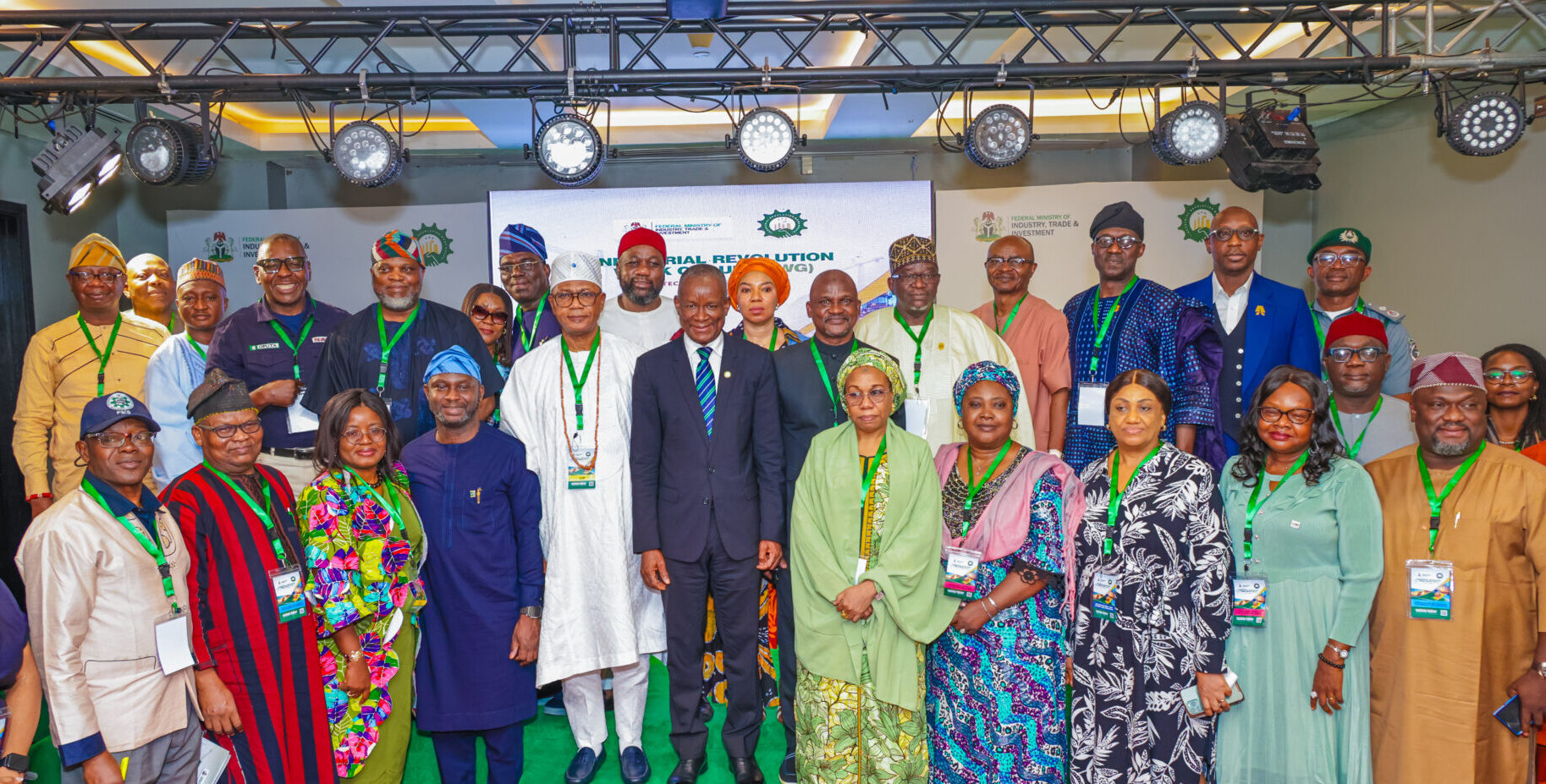
Manufacturing grows 3.24% in Q2 2026 even as sector’s share of GDP dips to 7.72%; five priority pillars to anchor next phase of the Nigeria Industrial Policy
The Office of the Minister of State for Industry, Federal Ministry of Industry, Trade and Investment (FMITI), through the Industrial Revolution Work Group (IRWG), on Thursday convened Technical Session 2.0 in Lagos, bringing together Government, the organised private sector, financial institutions and development partners to review progress under the Nigeria Industrial Policy (NIP) 2025 and agree practical actions for the next 30, 60 and 90 days.
The Session noted that Nigeria’s manufacturing sector is showing signs of recovery, with output growing by 3.24 percent in the second quarter of 2026, even as its share of real GDP declined to 7.72 percent and the textiles, apparel and footwear sub-sector contracted by 1.23 percent. Persistent constraints identified included high energy costs, inadequate infrastructure, limited access to affordable long-term finance, regulatory bottlenecks, weak domestic market conditions and skill gaps.
In his central message to the Session, the Honourable Minister of State for Industry stated that Nigeria has moved beyond the question of whether to industrialise, and that the priority is now how quickly and effectively the country can execute its industrial strategy. He described the next phase as an ―execution decade,‖ to be measured by increased productive capacity, operational factories, employment, domestic value addition, exports and competitiveness. Participants noted that the IRWG has evolved from an initial diagnostic and policy platform into an implementation-focused public–private mechanism supporting the NIP 2025. Early progress highlighted included over US$380 million in strategic financing mobilisation, a proposed ₦350 billion MSME Development Fund, training of 400 young Nigerians in mechatronics, certification of 131 companies and 220 products for AfCFTA access, Bank of Industry quick-win interventions, progress on industrial energy solutions at Idu, and implementation of Nigeria First initiatives.
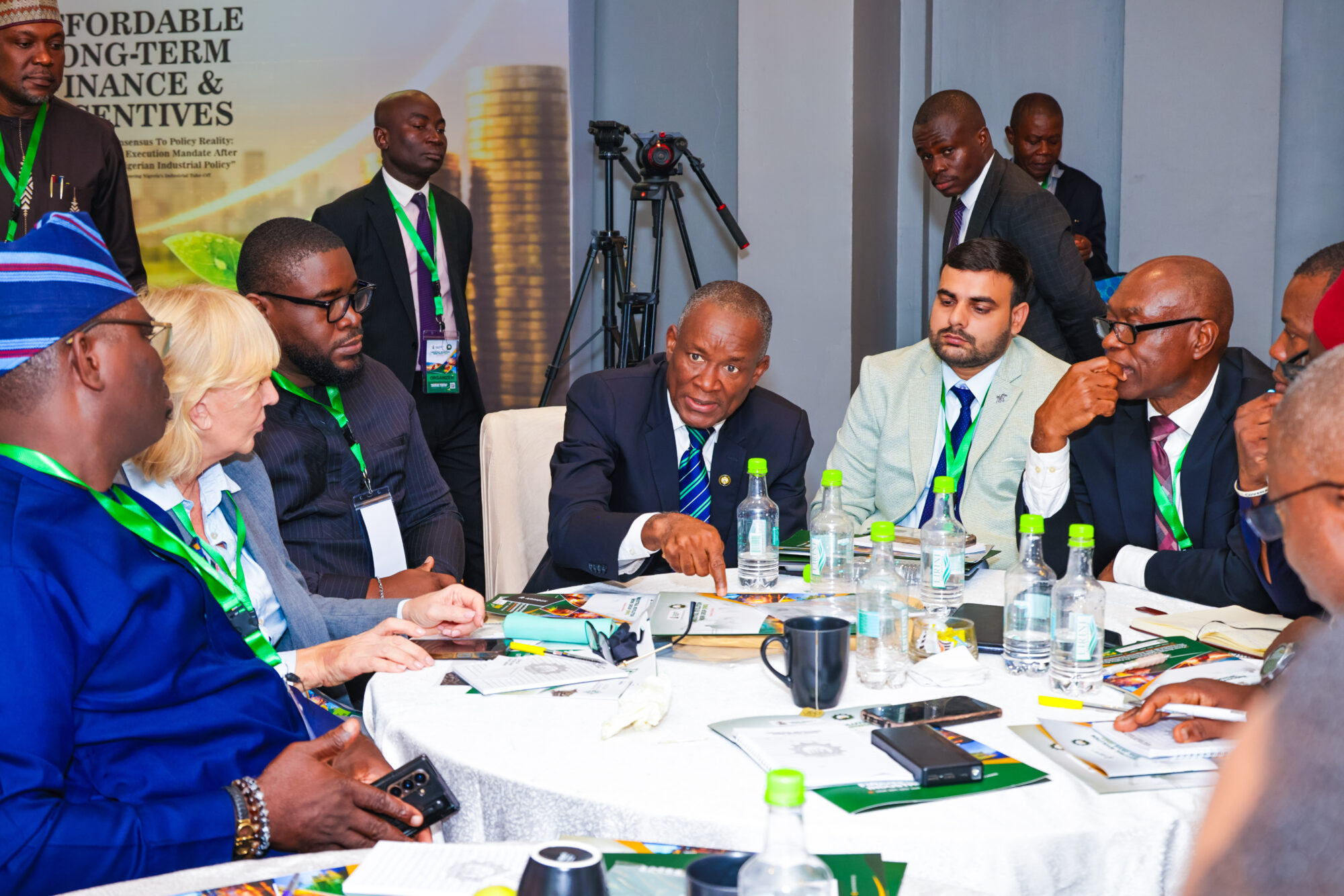
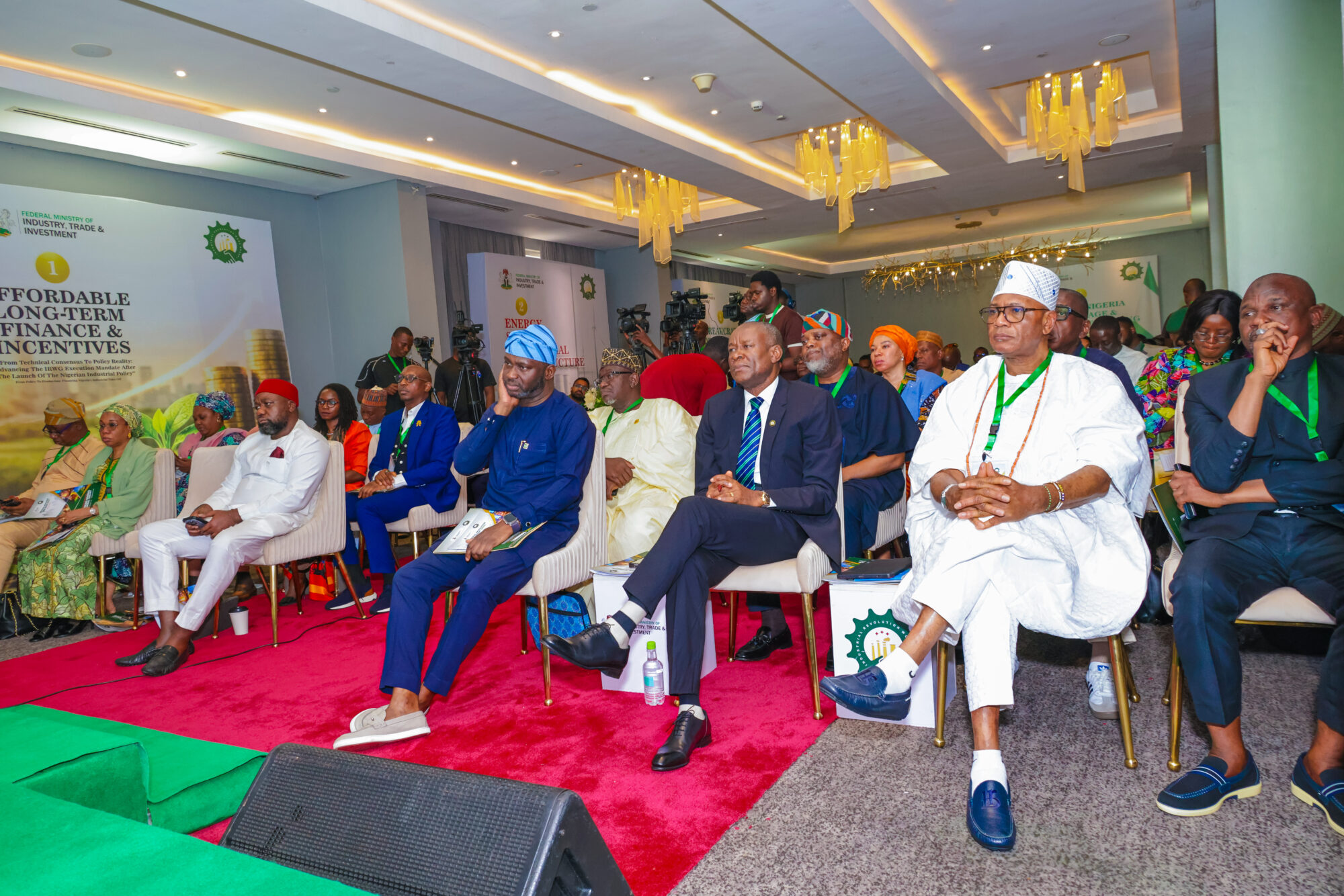
The Session stressed, however, that these represent foundations rather than completed transformation, with the immediate task being to convert commitments into actual disbursements, delivered infrastructure, financed firms, increased production, placed workers and awarded local contracts. Deliberations produced a consolidated 30/60/90-Day Implementation Matrix built around five interconnected pillars: Energy & Infrastructure, prioritising reliable and affordable power for industrial clusters through ring-fenced mini-grids and dedicated industrial power arrangements; Finance & Incentives, improving access to affordable, patient capital through cluster financing, credit guarantees, factoring and supply-chain finance; Made-in-Nigeria & Market Integrity, strengthening Nigeria First implementation and public procurement of locally manufactured products while tackling counterfeiting and weak standards; Regulatory Reform, reducing the cost and uncertainty of doing business through a government-wide audit of permits and licences and digital regulatory processes; and Skills & Innovation, aligning training with industry demand and expanding apprenticeships, internships and advanced manufacturing skills. A major outcome of the Session was agreement that the five pillars cannot operate independently, given the interdependence of energy, finance, regulation, market access, skills, technology, data and institutional coordination.
Stakeholders called for a consolidated implementation and dependency framework identifying what must be delivered, by whom, by when, and what depends on what— with the IRWG’s tracking approach shifting from activities to outcomes such as capital disbursed, megawatts delivered, enterprises financed, workers certified and placed, local contracts awarded and exports generated. The Session agreed six immediate priorities: adopting a single consolidated 30/60/90-Day Implementation Matrix with clear institutional ownership and measurable indicators; selecting a limited number of priority value chains and industrial locations for accelerated implementation; establishing a quarterly industrial scorecard distinguishing commitments from results; agreeing a 90-day regulatory quick-win agenda and escalation mechanism; linking skills programmes directly to employer demand, certification and placement; and making future IRWG reviews increasingly evidence- and results-driven. Participants noted that the forthcoming Ministerial Roundtable will further address industrial financing and is expected to support development of a National Industrial Finance Compact, setting out financing instruments, responsible institutions and a 30/60/90-day implementation framework.
Concluding the Session, stakeholders agreed that Technical Session 2.0 marked a clear transition from policy ambition to execution, with the immediate priority being to coordinate existing initiatives, remove binding constraints and hold institutions accountable for delivery. The measure of success, it was agreed, will ultimately be visible on the factory floor—more productive factories, stronger domestic value chains, lower production costs, increased Made-in-Nigeria procurement, more jobs, higher exports and a larger, more competitive manufacturing sector.