FG Officially Launches Project WHEAT-NESS

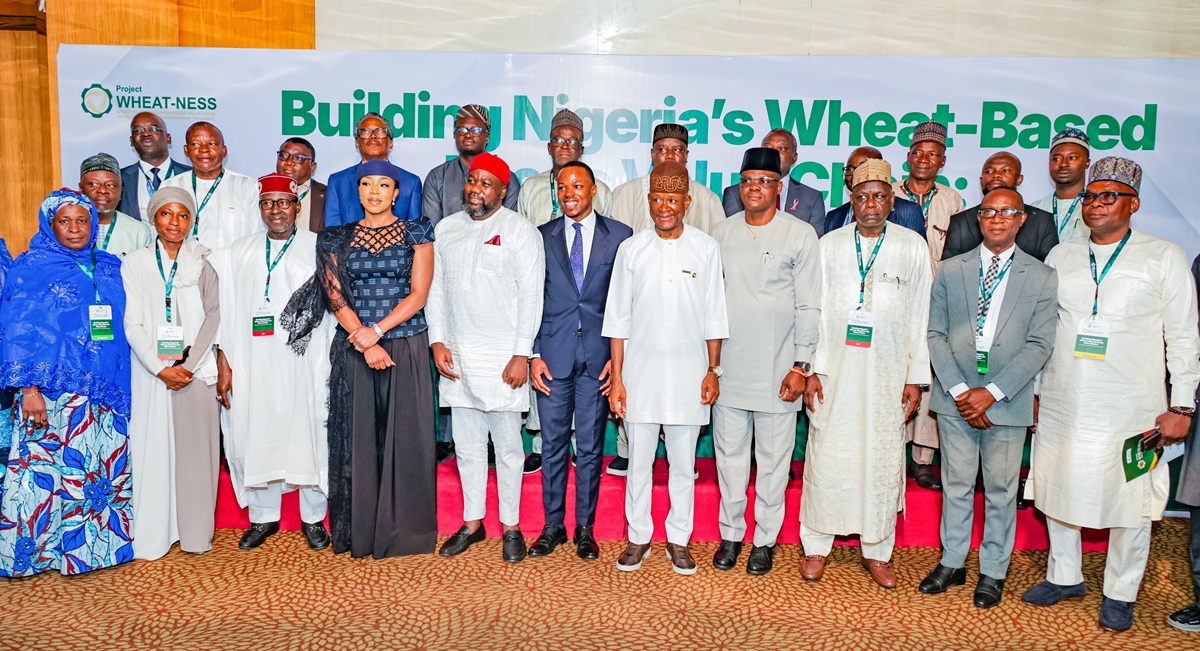
The Federal Government of Nigeria has on Wednesday, 14 October 2026, at a stakeholder engagement held at the Transcorp Hilton, Abuja, launched a Wheat-Based Consumer Foods Value Chain Optimisation and Cost Competitiveness Programme named Project WHEAT-NESS.
The programme is a national wheat value chain intervention approved by His Excellency, President Bola Ahmed Tinubu, GCFR. A Steering Committee chaired by the Honourable Minister of State for Industry, Senator John Owan Enoh, oversees the programme, while a Programme Delivery Unit (PDU) led by the National Programme Coordinator, Mr. Gerald Okunsebor, is responsible for delivery.
Project WHEAT-NESS takes a whole-chain view across five segments: upstream supply, industrial processing, downstream enterprise, consumer markets, and the finance and policy environment. It is expected to run for approximately 24 months.
The challenge is not only the volume of grain produced, but the cost, quality, consistency, financing, data baseline harmonization, and logistics of the whole chain from farm to table — determining the price Nigerian households pay for bread and other wheat-based foods.
Key Deliberations
The Launch featured a Welcome Address by the Permanent Secretary of FMITI, opening remarks on behalf of the Honourable Minister of Finance and Coordinating Minister of the Economy, a goodwill message from the African Development Bank (AfDB), a presentation by the National Programme Coordinator, a Special Address on behalf of the President, and a Keynote Address by the Honourable Minister of State for Industry, who formally launched the programme
- The Permanent Secretary stated that the programme would target a 10 to 15 per cent reduction in import dependence within its first three years, with potential foreign-exchange savings of US$200 million to US$300 million annually, and referenced a proposed Wheat-Based Consumer Food Value Chain Development Fund.
- The representative of the Minister of Finance stressed the need for clear objectives, measurable targets, an effective monitoring framework, and the validation and harmonization of domestic production and import statistics against the latest National Bureau of Statistics, Ministry, and industry data.
- The National Programme Coordinator explained that the programme will operate on two tracks — programmatic value chain activities and a blended-finance development fund — beginning with a comprehensive baseline assessment. Early interventions are expected before the end of 2026, and a memorandum of understanding with the Bank of Industry (BOI) is being formalized.
- The Special Adviser outlined four commitments: coordination among trade, agriculture, industry and finance; affordable capital; affordable energy and infrastructure (including storage and logistics); and measurement through indices and KPIs.
- The Honourable Minister of State affirmed that the programme is not a subsidy but a whole-chain programme, resting on three commitments: evidence before intervention, partnership by design, and accountability in the open.
High-Level Dialogue and Breakout Sessions
-
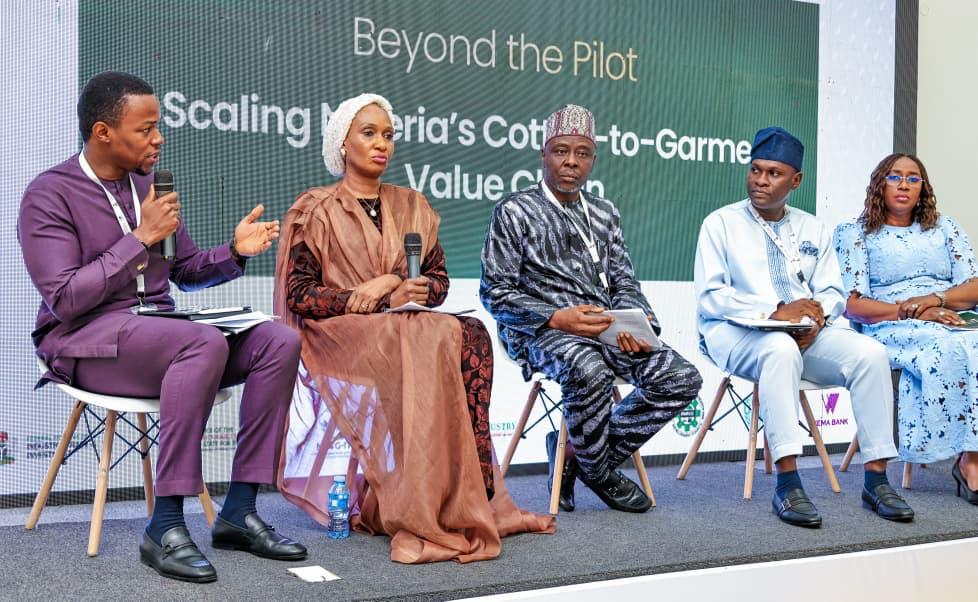
The high-level dialogue, “From Farm to Table: Building a Competitive, Efficient and Affordable Domestic Wheat Value Chain for the Nigerian Consumer,” was moderated by Ms. Yasmin Kamara-Osaghae of Manufacturing Africa.
Technical evidence from the Federal Department of Agriculture established that seed variety availability is not the primary binding constraint. Over 21 released wheat varieties (including Norman, Imam, and Borlaug-100 FMAN) have demonstrated potential yields of 6.0, 7.1, and 8.2 tons per hectare. The principal agronomic constraints identified were strict adherence to the recommended planting window (15 November to 15 December, outside of which yield losses of up to 40% can occur) and the high cost of inputs, land preparation, machinery, and irrigation energy.
ROOM A – UPSTREAM
-
Identified upstream supply chain fragmentation and seasonal yield inefficiency as the central problem. Key drivers included seed multiplication and demand forecasting gaps, high transportation costs from farms to processing hubs, variable quality specifications, and seasonal finance bottlenecks.
ROOM B- Enterprise
-
Identified the high cost of doing business as the central problem. Key drivers included multiple taxation and levies, the cost of energy, and distribution and logistics challenges. Participants also stressed the need for consistent volume and quality of local grain at a price close to the imported equivalent, inventory-based finance, insurance, and policy continuity.
Proposals Put Forward for Consideration
-
The breakout sessions put forward the following proposals for consideration by the Steering Committee and the Programme Delivery Unit:
- A technical committee on inputs, seed demand forecasting, and policy, and consideration of whether a national wheat coordinating body is needed.
- A structured roundtable of millers, seed producers, and grain producers to establish binding quality/volume specifications, testing standards, and transparent off-take arrangements.
- Input support for seed, fertilizer, pesticide, and mechanization (harvesters, seed drills, irrigation) through subsidies, vouchers, or private sector pre-financing, supported by farmer and farm mapping.
- Adoption of the Nigeria Agricultural Development Fund framework and risk-sharing structures, with blended finance windows coordinated for wheat.
- Encouragement of millers to establish processing capacity in wheat-producing regions, supported by road logistics, irrigation, and local storage.
- Lower-cost, fit-for-purpose finance across the value chain, including single-digit lending for equipment such as solar-powered pumps for farmers and solar energy systems for bakeries.
- Operationalization of the warehouse receipt system and Nigeria Commodity Exchange (NCX) structured trading, supported by insurance, collateral management, and inventory-based working capital finance.
- A comprehensive review of multiple levies, taxes, and charges imposed on producers, processors, and distributors by federal, state, and local agencies.
- Note: These proposals represent stakeholder inputs. The plenary signified general assent to the reports of the two rooms, but this assent was not a formal decision of the Steering Committee. No priority will be submitted without evidence, in line with the Honourable Minister of State’s mandate.
Next Steps....
-
- The Programme Delivery Unit (PDU) will conduct a comprehensive baseline assessment across each part of the value chain, incorporating a data-harmonization exercise for domestic production and import metrics.
- The memorandum of understanding between the PDU and the Bank of Industry (BOI), and potential collaboration frameworks with risk-sharing entities such as NIRSAL, will be formalized.
- The first tranche of early interventions, drawn from breakout session outputs, is expected before year-end.
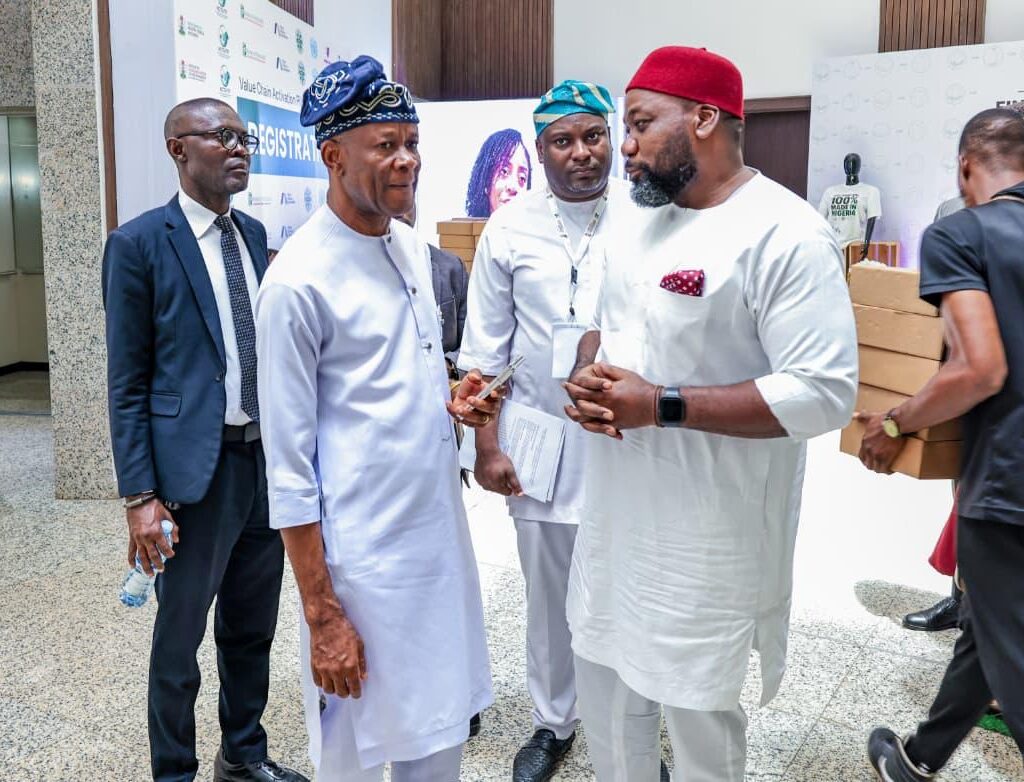
- The PDU will log and follow up on every registration at the Partnership Registry Desk.
- The programme team will continue engaging stakeholders by email, letter, and direct visits.
Key Outcomes...
-
- Competitiveness and Affordability: A more efficient industry produces a fairer price for Nigerian households.
- Production Costs as Central Constraint: Energy, logistics, input costs, high interest rates, and multiple levies were repeatedly cited as primary obstacles.
- Industrial Grade Standards: Local grain must meet industrial processing requirements. Variety selection, agronomic compliance (especially the 15 Nov–15 Dec planting window), and testing standards are essential for industrial acceptance.
- Fit-for-Purpose Finance: Financial products must be tailored — seasonal for farmers, patient for processors, accessible for small bakeries — and backed by inventory finance, warehouse receipts, and risk-sharing mechanisms.
- Policy Continuity: Stakeholders urged a unified platform uniting government, industry, research institutes, and finance.
- Evidence-Based Delivery: The programme rests on harmonized baseline data, clear KPIs, and regular progress reporting to the President.

Conclusion
-
The Launch marked the formal public commencement of Project WHEAT-NESS and provided stakeholders their first structured opportunity to present constraints and priorities to Government. The vote of thanks stressed that the conversation must translate into concrete actions, investments, and measurable outcomes.
The Launch reaffirmed the commitment to sustained collaboration among government, industry, finance, research, and development partners to reduce production costs, improve local supply quality, and keep wheat-based foods affordable for all Nigerian households.
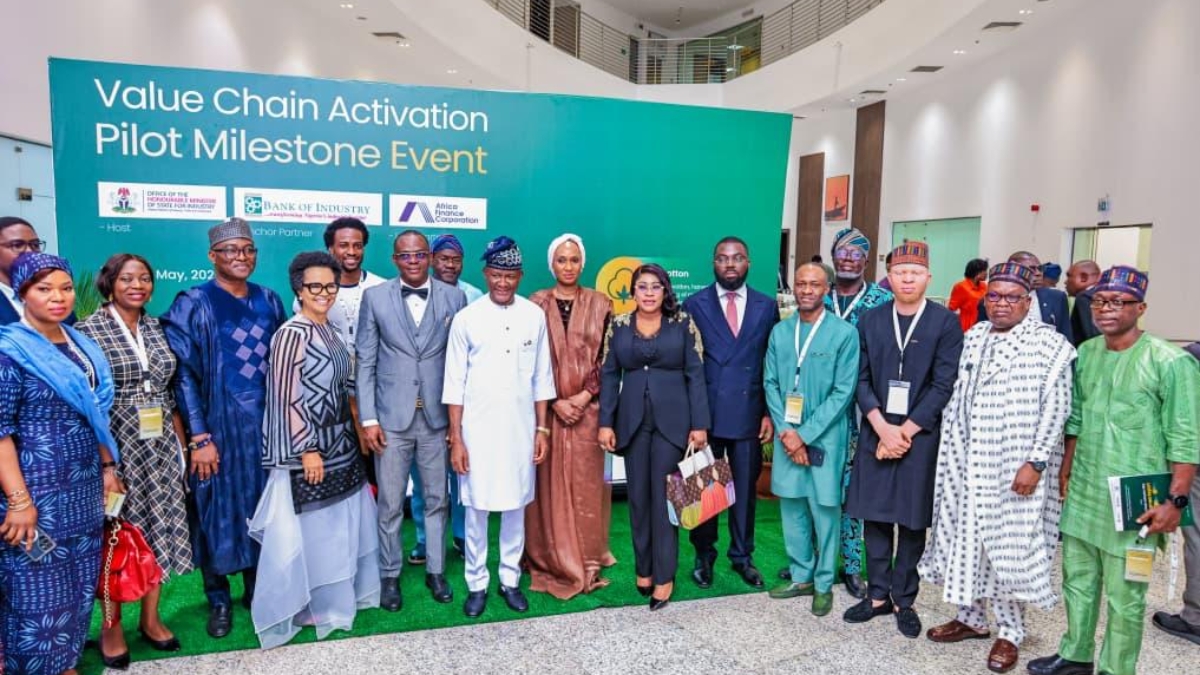
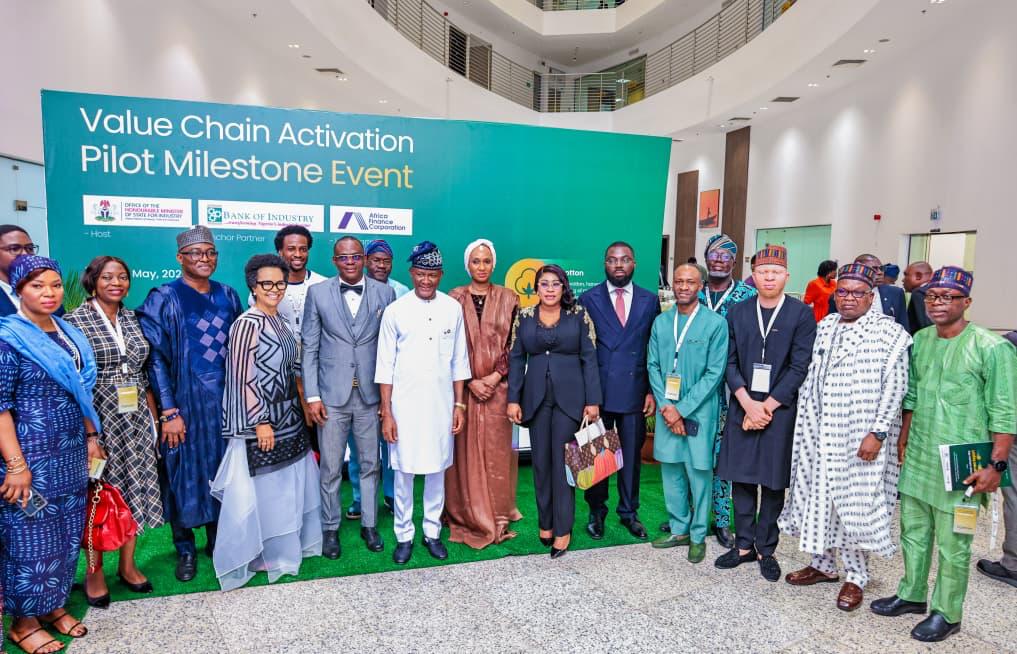
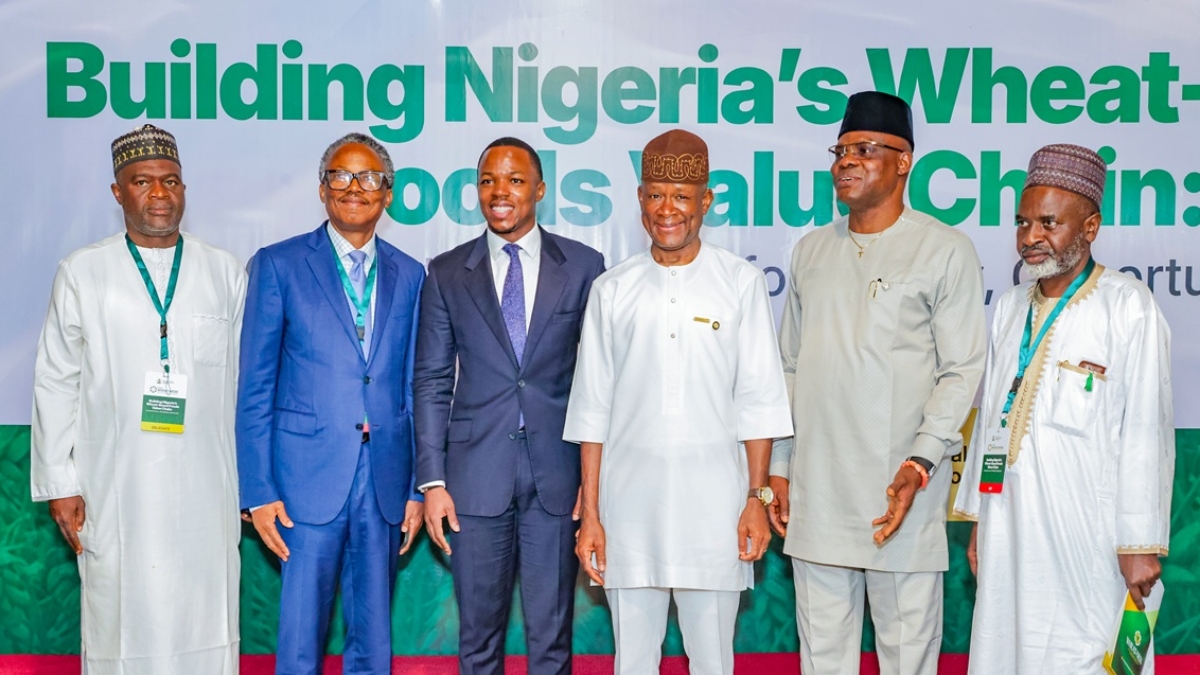
The event concluded at approximately 5:00 p.m. following the vote of thanks on behalf of Mr. Mohammed Bala, Director of Industrial Development, FMITI, followed by a group photograph, networking, and engagement at the Partnership Registry Desk.