Hmindustry > News > Projects > Nigeria’s Cotton, Textile and Garment Transformation Programme Gains Momentum
Nigeria’s Cotton, Textile and Garment Transformation Programme Gains Momentum
Federal Government Advances Industrial Revival Through Structured Cotton, Textile and Garment Value Chain Reform.
The Federal Ministry of Industry, Trade and Investment led by the Honourable Minister of State for Industry, Senator John Owan Enoh has reaffirmed its commitment to rebuilding Nigeria’s Cotton, Textile and Garment (CTG) sector through a coordinated industrial transformation programme designed to strengthen domestic production, improve value chain integration, and increase competitiveness.
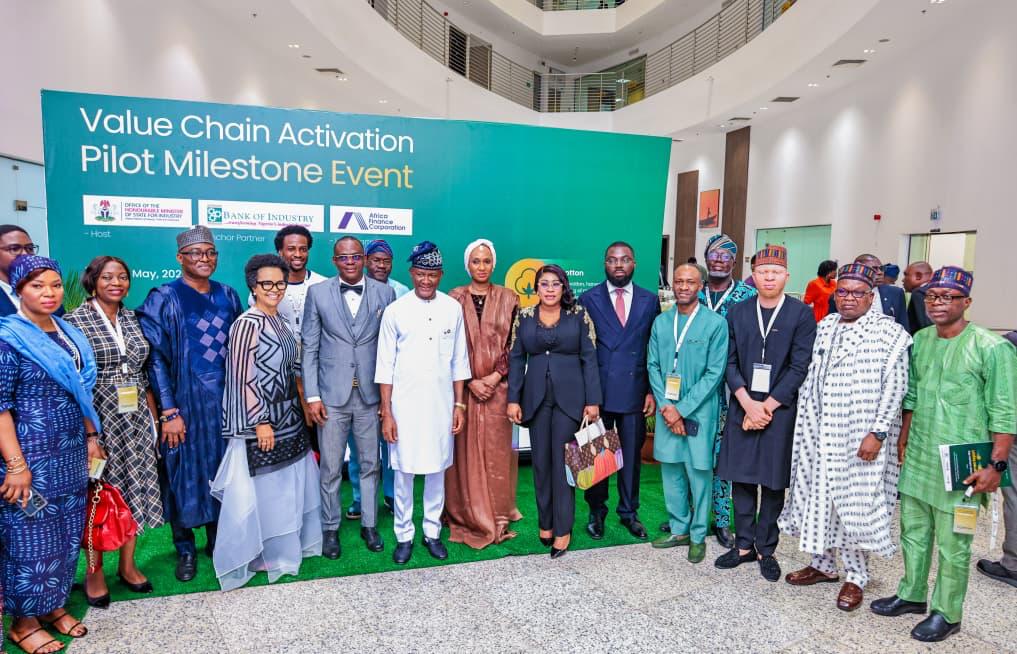
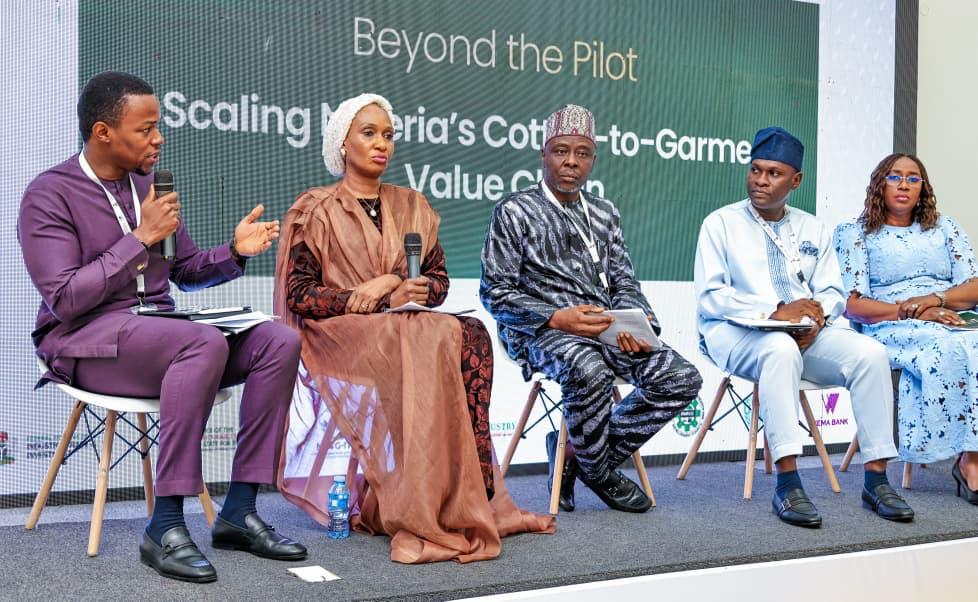
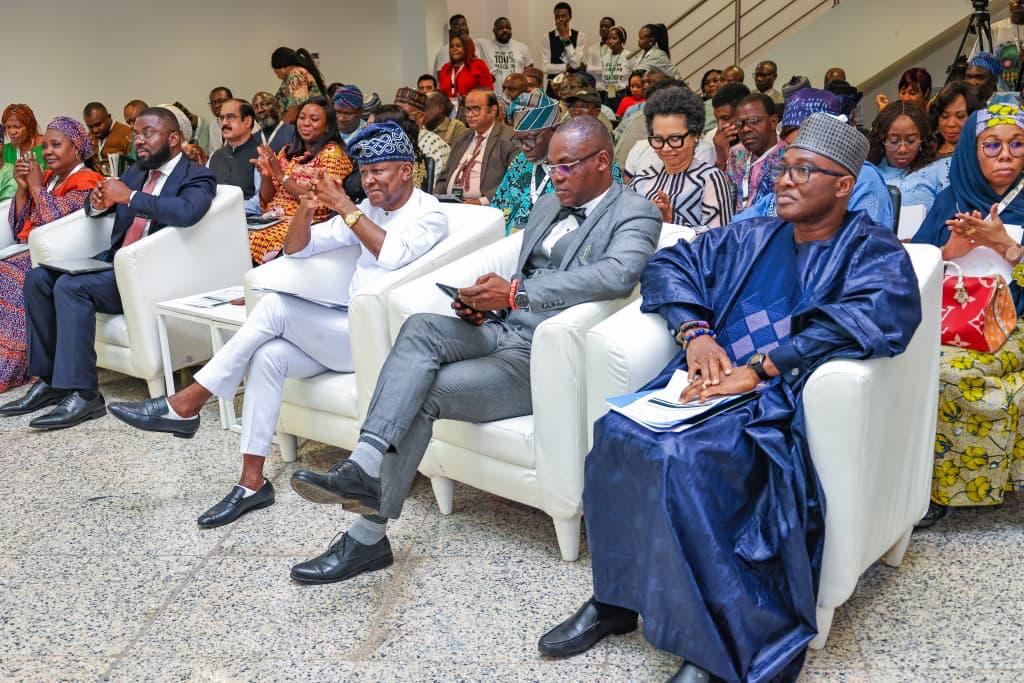
Speaking during the closeout of Phase I of the programme, stakeholders highlighted the importance of building a functional production architecture capable of supporting large-scale cotton cultivation, textile manufacturing, and garment production within Nigeria.
The initiative forms part of the Federal Government’s broader industrialisation agenda aimed at repositioning the CTG sector as a driver of employment, manufacturing growth, and economic diversification.
Moving Beyond Policy Proposals
According to the Minister, the programme was designed not merely as a policy concept, but as a practical pilot implemented under real market conditions taking into account stakeholders perspectives and sector tour challenges.
The pilot tested whether Nigerian manufacturers, farmers, financiers, and garment producers could operate as an integrated system capable of delivering quality products competitively and on schedule.
The exercise demonstrated that high-quality long-staple cotton can be produced locally throughout the year and that Nigerian garment manufacturers can meet production specifications when supported by structured coordination across the value chain.
Stakeholders noted that previous interventions within the textile industry often focused on isolated support mechanisms without addressing the wider operational linkages required for a functional industrial chain.
The pilot programme identified several critical realities shaping the future of the sector.
Key Findings From the Phase I Pilot
Structured Demand Strengthens Production
One of the central findings was that visible and structured downstream demand can stabilise the entire production ecosystem. Manufacturers are better able to plan investments and production schedules when order volumes and delivery timelines are clear. This clarity also influences upstream activities, including cotton farming decisions, mill operations, and financing arrangements.
Nigerian Farmers Can Deliver Competitive Input Quality
The programme also showed that Nigerian cotton farmers can improve input quality when provided with the right incentives, technical support, and reliable market signals.This finding challenges long-standing assumptions that raw material limitations make local textile production difficult to scale.
Execution Gaps Are Now Better Understood
The pilot exposed operational weaknesses affecting the sector, particularly in logistics, financing coordination, and institutional alignment. Officials explained that identifying these gaps at transaction level provides valuable insight for future reforms and implementation strategies.
Addressing Nigeria’s Textile Sector Decline
Nigeria’s textile industry has experienced significant decline over several decades despite multiple interventions. Active textile mills have reportedly reduced from nearly 180 to fewer than 20, while capacity utilisation remains low.
At the same time, Nigeria continues to import billions of dollars worth of textile products annually despite possessing cotton farmers, garment factories, and a large domestic apparel market.
Stakeholders at the event stressed that the decline was not caused by a lack of local production ability, but by the absence of an integrated industrial system capable of connecting farmers, manufacturers, financiers, logistics providers, and markets.
Economic Opportunities and Employment Potential
The programme also highlighted the economic opportunities associated with a revived CTG sector.
Nigeria currently produces less than thirty percent of domestic textile demand, creating significant room for local manufacturing expansion.With a growing youth population and increasing regional trade opportunities under the African Continental Free Trade Area (AfCFTA), officials believe the sector could generate substantial employment opportunities across cotton farming, textile processing, garment manufacturing, transportation, logistics, retail, and exports.
Phases II and III Already Underway
Following the completion of Phase I, government officials confirmed that Phases II and III of the programme are already in progress.
Immediate priorities include:
- Launching a revised policy framework for the CTG sector
- Operationalising the National CTG Development Council
- Improving industry visibility through a national dataset
- Expanding participation across the pilot programme
- Increasing production volumes across the value chain
- Officials stated that the programme is focused on building long-term industrial capacity through coordinated policy alignment, financing support, infrastructure development, logistics improvement, and institutional strengthening.

Strategic Partnerships Driving the Programme
The transformation programme continues to receive support from both public and private sector institutions.
Partners acknowledged during the event included the Bank of Industry, Africa Finance Corporation, United Nations Industrial Development Organization (UNIDO), Raw Materials Research and Development Council, and Wema Bank.
Stakeholders emphasised that collaboration between government institutions, development finance organisations, manufacturers, and private investors will remain critical to sustaining the programme’s long-term objectives.
Building a Sustainable Industrial System
Organisers concluded that the garments and production outputs presented during the pilot may currently be modest in scale, but they represent the foundation of a broader industrial system designed for sustainability and growth.
The Federal Government maintains that rebuilding Nigeria’s cotton, textile, and garment sector will require disciplined execution, institutional coordination, and consistent long-term commitment across all segments of the value chain.
As implementation advances into subsequent phases, stakeholders expressed confidence that the programme can help restore industrial activity within the sector while strengthening Nigeria’s manufacturing base and improving economic opportunities nationwide.