TET

Women’s Month: Senator John Owan Enoh Visits GATIMO Garment Factory, Commends Nigerian Manufacturing Excellence

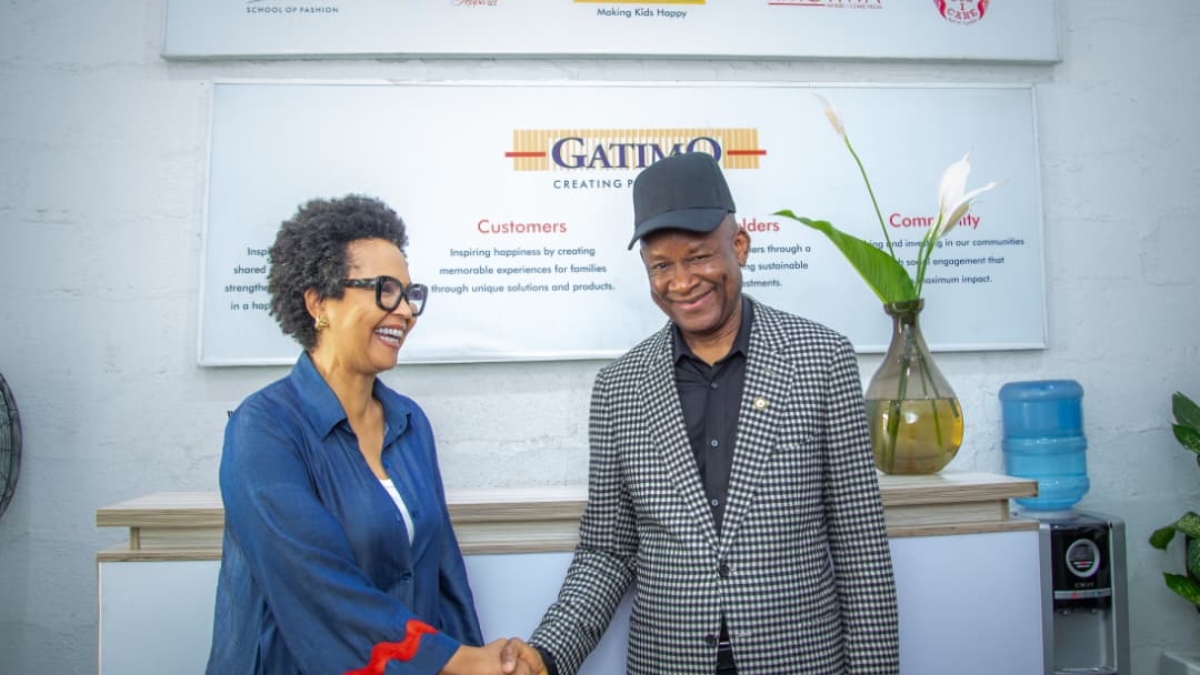
As part of activities marking Women’s Month, the Honourable Minister of State for Industry, Senator John Owan Enoh, paid a visit to the GATIMO garment production facility, the parent company of the renowned Nigerian children’s clothing brand Ruff ‘n’ Tumble.

The company was founded and is led by Mrs Nike Ogunlesi, whose work in building a strong local manufacturing brand has become a reference point for disciplined production and long term enterprise development in Nigeria.
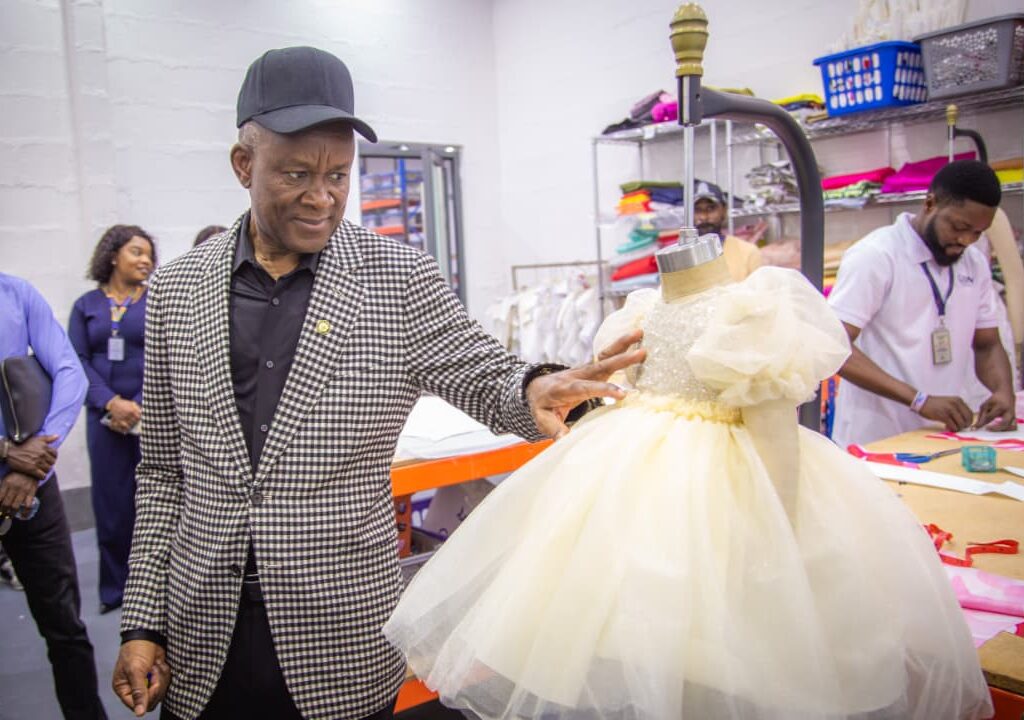
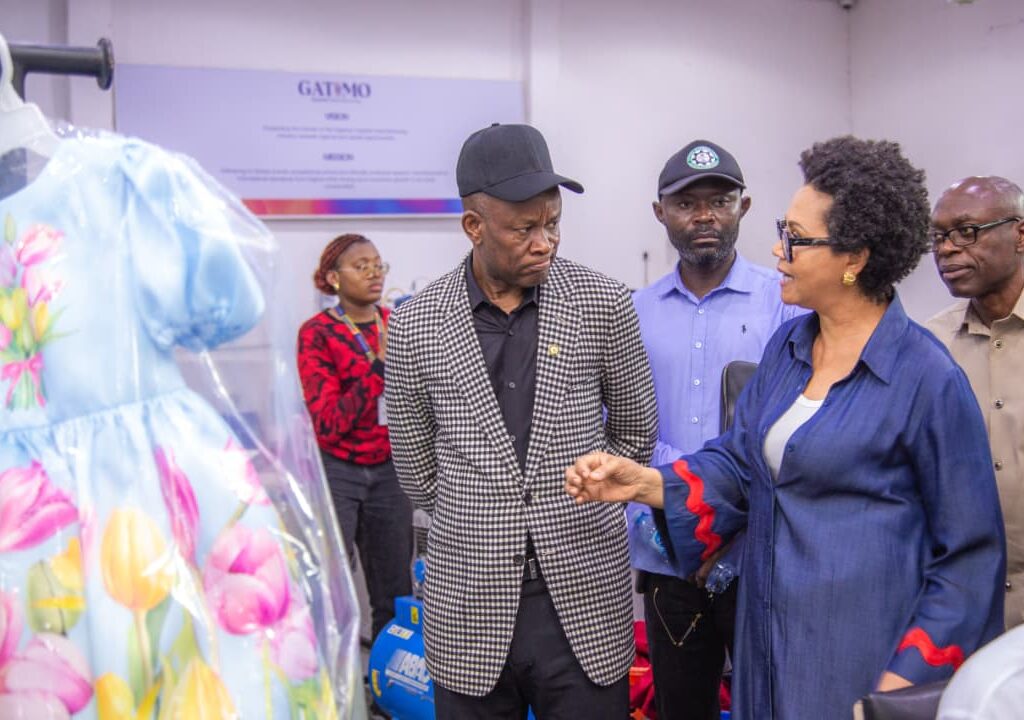
During the visit, the Minister toured the production floor and interacted with staff, observing first hand the systems and processes that have sustained the brand for more than two decades. What he encountered, he noted, was far more than a successful fashion label. It was a functioning example of structured Nigerian manufacturing.

According to the Minister, GATIMO represents the core elements required for industrial growth. These include value addition within the country, workforce training, quality control systems, and the steady development of a trusted brand rooted in local production.
Reflecting on the visit, Senator Enoh noted that leadership must remain connected to the factory floor, where policies translate into real jobs, skills, and economic value.
“In what has been a personally reflective period for me, I was intentional about spending time where real production is taking place. The factory floor is where policy meets people. It is where the true impact of industrial policy can be measured,” he stated.
He also commended Mrs. Ogunlesi for her role in building an enterprise that has created employment, transferred technical skills, and maintained high production standards within Nigeria’s manufacturing space.
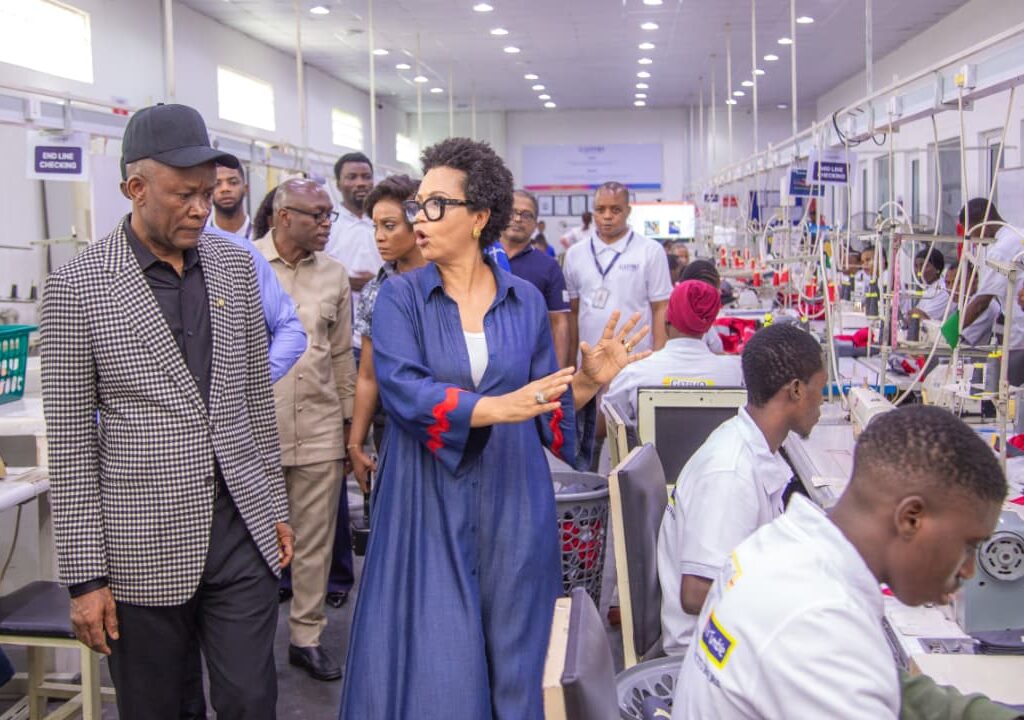
The Minister emphasized that women entrepreneurs like Mrs. Ogunlesi are already making significant contributions to the industrial economy.
“Women like Mrs. Ogunlesi are not waiting for empowerment. They are already building businesses, employing Nigerians, and demonstrating that local manufacturing can compete on quality, branding, and sustainability,” he said.
Senator Enoh further explained that enterprises such as GATIMO and Ruff ‘n’ Tumble represent the type of industrial model Nigeria must scale as the country deepens its manufacturing capacity and strengthens its competitiveness under the African Continental Free Trade Area.
He added that the Federal Government remains committed to creating an enabling environment through clear policy direction, access to financing, and institutional coordination that supports the growth of local industries.

The visit also reinforced the Minister’s guiding principle of “Give to Gain,” which he described as an economic approach that encourages deliberate government support for productive enterprises.
“When government provides policy clarity, structured financing pathways, and institutional alignment, the country gains stronger factories, better jobs, deeper value chains, and greater export readiness,” he noted.

The Minister concluded that Nigeria’s industrial future is already taking shape through enterprises that remain committed to local production and quality standards.

His visit to GATIMO, he said, serves as a reminder that Nigerian industry is capable of building premium, competitive, and enduring brands, with women playing a central role in that transformation.
130A1224 (1)

THE MINISTER OF STATE FOR INDUSTRY, SEN. JOHN ENOH ON STRATEGIC TOUR OF KEY INDUSTRY SITES IN KADUNA STATE.

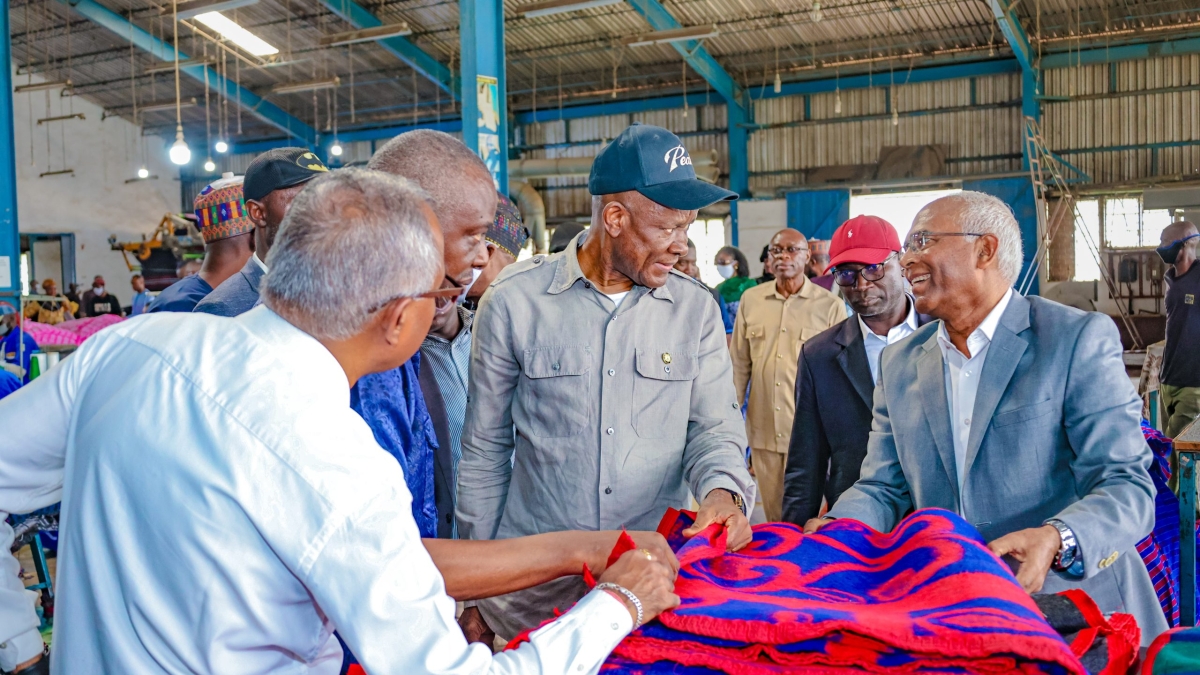
The Minister of State for Industry, John Enoh, has undertaken a strategic tour of key industrial sites in Kaduna state to speed up the revival efforts of the comatose tex-tile, cotton and garment (CTG) sector.

The minister was accompanied by the Permanent Secretary of the Ministry, Rimi Abba, and the Director-General of the Bank of Industry, Dr Olasupo Olusi. The minister, during the tour yesterday, said the tour was part of the Federal Government’s renewed commitment to industrial revital isation under President Bola Ahmed Tinubu’s eight-point agenda. The Agenda Seven prioritises job creation, inclu-sive economic growth, and industrial development.

During a visit to United Nigerian Textiles Limited (UNIL), the minister, who was received by the Emir of Kano and Chairman of UNTL, His Royal Highness Sanusi Lamido, described UNTL as a historic textile mill that once served as a cornerstone of Nigeria’s manufacturing sec-tor.

Enoh acknowledged the concerns over the near collapse of the sector while assuring that under President Tinubu’s leadership, several developmental strides have been made to reposition the CTG sector.

The steps taken so far include convening sub-sector stakeholder engagements to identify and resolve bottlenecks, promoting public-private partnerships and collaborating with development partners while strengthening policy frameworks to support local manufacturing and boost export competitive-ness.

He underscored the symbolic and economic importance of UNIL’s revival, stating that its return to full operation would restore confidence in Nigeria’s textile heritage and catalyse broader industrial growth.

At Chellco Industries, the minister noted that the firm represents a resilient textile firm that has remained operational since 1980, despite decades of economic turbulence.

Enoh commended the management for their unwavering commitment and noted that Chellco currently provides direct employment to over 290 workers, contributing significantly to the local economy.

He pledged continued government support and conveyed President Tinubu’s goodwill, assuring stakeholders that the administration remains steadfast in its mission to restore Nigeria’s industrial pride and reposition the CTG sector as a driver for inclusive growth.

In his opening remark, the Permanent Secretary of the Federal Ministry of Industry, Trade, and Investment (FMITI), Ambassador Nura Rimi Abba, represented by Bala Mohammed, Director of the Industrial Development Department, stressed the urgent need for results-driven execution, highlighting the direct impact of industrial growth on employment, economic resilience, local production capacity, and export expansion.

The Director General of the Manufacturing Association of Nigeria (MAN) shared critical insights into the session’s thematic focus, emphasising the importance of collaboration between public and private sectors. Representing GIZ, Dr. Dada Olusegun reaffirmed the organisation’s commitment to sustainable development and its ongoing partnership with the ministry to drive skills development and sustainability.

The President of MAN and Co-Chair of IRWG, Otumba Francis Ivieshioye OFR, encouraged participants to actively contribute by leveraging their expertise to shape the future of Nigeria’s industrial sector.

Setting the tone for the discussions, Senator John Owan Enoh, Honourable Minister of State for Industry and Chairperson of IRWG, delivered a powerful address.

“We gather here today under no illusion. We are not here for symbolism or to add another page to government archives. We are here because something must change—permanently and decisively, in how we execute Nigeria’s industrial ambition.” Enoh stated.

He further noted that, for too long, industrial policy discussions lacked speed and consistency, resulting in slow and inconsistent progress. He emphasised that IRWG was established not as an advisory body but as an operational force focused on tangible results.

The Minister stated that the success of IRWG’s work must be measured by the momentum created, the systems improved, the industries revived, and the jobs enabled. To ensure accountability, he urged participants to focus discussions on execution, setting measurable targets for 90 days, six months, and one year while establishing a framework for continuous evaluation.

He also announced that the Draft National Industrial Policy was ready for revalidation and assured participants that it would serve as a dynamic framework tackling Nigeria’s most pressing industrial challenges, including energy insecurity, logistics issues, talent gaps, workforce development, and shifts in global supply chains.

Participants engaged in structured discussions centered on key industrial priorities such as unlocking long-term financing and incentives for SMEs and major industries, strengthening energy security and infrastructure to support manufacturing, simplifying bureaucratic processes to eliminate regulatory bottlenecks, promoting Made-in-Nigeria initiatives and enforcing anti-contraband measures, and addressing the skills gap while embracing technological innovation.

The session ended satisfactorily, reinforcing the need for execution-driven thinking while ensuring that every proposal translates into real industrial impact.