The Industrial Revolution Work Group (IRWG) is Nigeria’s multi-stakeholder delivery platform for industrial transformation. Convened by the Honourable Minister of State for Industry and co-chaired by the President of the Manufacturers Association of Nigeria, it turns national industrial policy into named actions, named owners and fixed deadlines, and then follows each one to the factory floor.
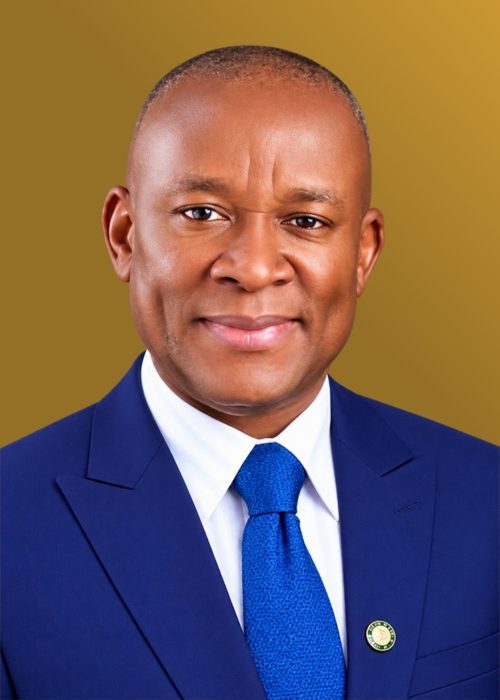
When we inaugurated the Industrial Revolution Work Group in February 2025, Nigeria did not lack plans. Our shelves were full of them. What we lacked was consequence: a disciplined way of turning the right intentions into factories that run, products that sell and jobs that can be counted.
The Work Group was built to supply that consequence. It brings government, the organised private sector, development finance institutions and academia into a single engine room, organised around the five constraints that have held Nigerian industry back for a generation. It does not exist to produce communiqués. It exists to clear paths.
In twenty months, the method has earned its keep. Our first Technical Session converted diagnosis into recommendations, each with an owner and a clock. Those recommendations informed the Nigeria Industrial Policy. Our first Ministerial Roundtable named the Idu Industrial District as the national model for industrial power, and ground has since been broken there on 50 megawatts of power infrastructure. Our second Roundtable produced the National Industrial Finance Compact, now endorsed in principle, with a fund for credit-ready small businesses as its first early delivery initiative.
In twenty months, the method has earned its keep. Our first Technical Session converted diagnosis into recommendations, each with an owner and a clock. Those recommendations informed the Nigeria Industrial Policy. Our first Ministerial Roundtable named the Idu Industrial District as the national model for industrial power, and ground has since been broken there on 50 megawatts of power infrastructure. Our second Roundtable produced the National Industrial Finance Compact, now endorsed in principle, with a fund for credit-ready small businesses as its first early delivery initiative.
Technical Sessions, Ministerial Roundtables, standing Workstreams and public scorecards
The Engine Room of Nigeria’s Industrial Policy
- Mission
- Vision
To spearhead the transformation of Nigeria’s industrial landscape through a proactive, solutions-driven approach, fostering innovation, advanced manufacturing, and infrastructure development. By harnessing technology, strategic investments, and public-private collaboration, we will enhance competitiveness, drive export-led growth, and build an ecosystem where industries not only survive but thrive on the global stage.
To position Nigeria as Africa’s foremost industrial powerhouse: a nation where innovation, local value creation, and advanced manufacturing drive economic growth, create millions of jobs, and establish Nigeria as a globally competitive player in the Fourth Industrial Revolution (4IR).
Inauguration
The Work Group is inaugurated and five Thematic Work Groups are commissioned to produce evidence, not essays.
Technical Session I, Lagos
“From Activities to Outcomes: Driving Industrial Renaissance.” A communiqué signed by the Chair and Co-Chair, and an instruction to put a national industrial policy on the table.
Ministerial Roundtable I, Abuja
Energy Security and Industrial Infrastructure. The Idu Industrial District is designated the national model for industrial energy reform.
Nigeria Industrial Policy launched
A living industrial policy with a single delivery clock, and the IRWG as part of its delivery architecture.
First 90-day report
The first official scorecard from the Office of the Honourable Minister of State for Industry.
Technical Session II and Ministerial Roundtable II, Lagos
“From Policy to Production: Financing Nigeria’s Industrial Take-Off.” A consolidated Implementation Matrix, new private-sector members inducted, and the National Industrial Finance Compact tabled.
Ground broken at Idu
Work begins on 50 megawatts of power infrastructure, the first roundtable decision made physical.
Ground broken at Idu
Work begins on 50 megawatts of power infrastructure, the first roundtable decision made physical.
Compact endorsed in principle
Part A of the National Industrial Finance Compact is endorsed in principle, with the MSME Credit Readiness Fund as its first early delivery initiative
A method, not a meeting: the IRWG Diagnoses, Prescribes, Codifies and Verifies
Every IRWG activity is tied to an output. The through-line from deliberation to delivery is the most valuable asset the Work Group possesses.
Diagnose
Five Thematic Work Groups, each built around a binding constraint, produce evidence rather than essays, using one Secretariat template: challenge, status, recommendation, action, timeline, indicator.
Prescribe
Technical Sessions convert diagnosis into recommendations with named owners and clocks: short (0 to 3 months), medium (4 to 6 months) and long (7 to 12 months).
Codify
Recommendations move into national instruments: the Nigeria Industrial Policy, papers for the Federal Executive Council, and compacts signed by the institutions that must act.
Verify
Implementation matrices, 30, 60 and 90 day timetables and public scorecards test delivery against commitment, long after the lights are out.
Delivery
Twenty months in, the engine room speaks in numbers it can defend
US$380m+
Strategic financing mobilised and in structuring, including the AfDB N-MICP framework and the KOICA, UNDP and SMEDAN ACE programme
₦350bn
Proposed MSME Development Fund, put forward by a private consortium
50MW
Power infrastructure on which ground has been broken at the Idu Industrial District
400
Young Nigerians trained in mechatronics across Kano, Lagos, Yobe and Zamfara
131
Companies awarded African Quality Marks, with 220 products certified for continental markets
5
Quick-win tracks activated with the Bank of Industry after a joint diagnostic with FMITI
Nigeria First has also been operationalised in public procurement, with the Bureau of Public Procurement, NADDC and local automotive manufacturers.
Source: NIP first 90-day report, June 2026; IRWG Secretariat records, September 2026. Financing figures are reported by stage and are not all disbursed.
Five Thematic Work Groups
Each Organised Around a Constraint Rather Than an Institution
Each group draws its members from the public and private sectors, development agencies and academia, works to clear terms of reference, and reports back to the full Work Group in plenary.
-
01
Affordable Long-Term Finance and Incentives
-
The Constraint
Credit is too dear and too short for industry to invest.
-
The Agenda
Long-term industrial finance windows, single-digit manufacturing credit, risk-sharing and guarantees, and delivery of the National Industrial Finance Compact.
-
02
Energy Security and Industrial Infrastructure
-
The constraint
Power and gas are unreliable and expensive where factories need them most.
-
The Agenda
Gas for manufacturers on strategic-user terms, cluster power on the Idu model, grid modernisation, industrial corridors and special economic zones.
-
03
Bureaucratic Obstacles and Regulatory Reform
-
The constraint
Duplicate licences, multiple taxation and overlapping mandates raise the cost of doing business.
-
The Agenda
Eliminate identical licensing, publish regulatory charges online, digitise documentation and shift regulation from revenue to service.
-
04
Made-in-Nigeria Patronage and Anti-Counterfeiting
-
The constraint
Local products lose to perception, counterfeits and procurement habits.
-
The Agenda
Nigeria First in public procurement, standards and laboratories, border enforcement and export-grade branding and packaging.
-
05
Skills Development and Industrial Innovation
-
The constraint
Training is misaligned with the factory floor and access is thin.
-
The Agenda
A National Apprenticeship Programme, digital and green skills, stronger innovation hubs and a searchable national register of trained youth.
Ministerial Roundtable
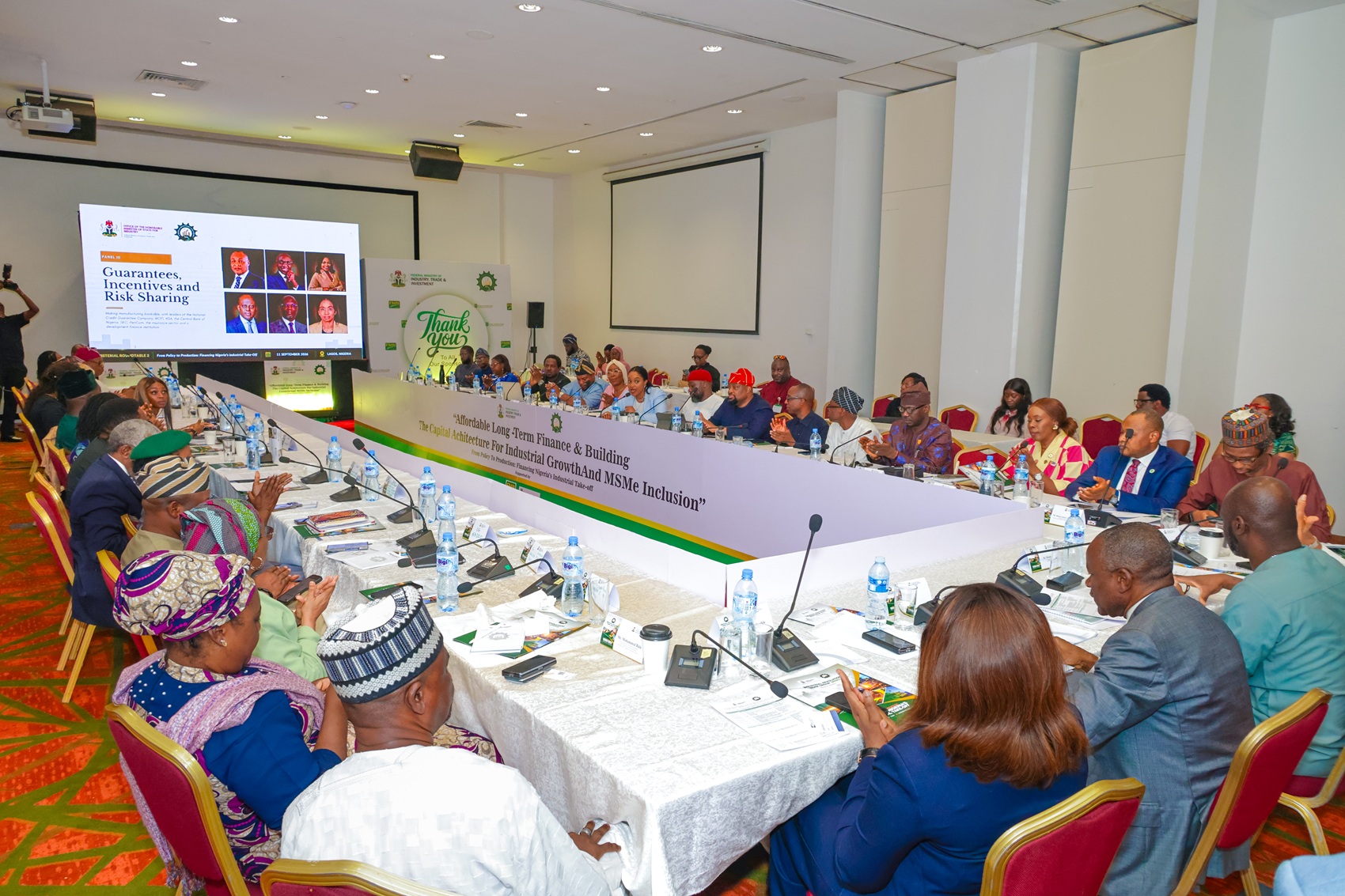
A closed session of principals, held under the Chatham House Rule, that confronts one binding constraint at a time and is built to end in a decision: a designated cluster, a compact, a committed institution.
Technical Session
The full Work Group in session. Around one hundred members across the five Thematic Work Groups take stock, interrogate dependencies between pillars and adopt a consolidated Implementation Matrix of actions, owners, timelines and indicators.
A War Cabinet and Think Tank for Industrial Transformation
The Industrial Revolution Work Group (IRWG) serves as Nigeria’s one-stop hub for industrial transformation: a war cabinet and think tank committed to driving the reengineering of the nation’s industrial sector. Tasked with the practical execution of policies, interventions, and solutions, the IRWG will diagnose challenges, formulate strategic responses, and implement hands-on solutions that enhance productivity, competitiveness, job creation, and economic resilience. Our goal is to remove bottlenecks, facilitate seamless industrial operations, and position Nigeria as a global manufacturing and innovation hub.
-
01
Translate industrial policy into actionable, outcome-driven implementation plans
-
02
Provide a platform for co-creation among regulators, investors and operators
-
03
Drive regulatory reform to remove administrative and fiscal bottlenecks
-
04
Promote Made-in-Nigeria goods through branding, education and market access
-
05
Champion innovation, digital transformation and the upskilling of the workforce
-
06
Institutionalise accountability through performance tracking and public reporting
The National Industrial Finance Compact
Make One Instrument Work Before Announcing Twelve
Small and medium enterprises contribute close to half of Nigeria’s output yet receive a vanishing share of its credit. The problem is less the existence of capital than its price, its risk and its tenor. The second Ministerial Roundtable, held in Lagos on 11 September 2026, set out to redesign that architecture.
The constraint on industrial finance is not liquidity. It is the architecture through which liquidity reaches production.
Its product is the National Industrial Finance Compact: twelve instruments under a cross-cutting risk-sharing layer, each with a lead institution, a first action and a 30, 60 and 90 day clock. On 29 September 2026 the Chair, the Co-Chair and the chief executives of participating institutions endorsed Part A of the Compact in principle, as a statement of shared intent. Lead institutions now confirm the sizing, pricing and tenor of their instruments in writing.
First Early Delivery Initiative: the MSME Credit Readiness Fund
FATE Foundation
prepares and refers credit-ready firms
Bank of Industry
makes the credit decision and lends
NCGC
shares the risk through partial guarantees
Design is completed within 30 days, the first cohort trains in November 2026, and results are reported by December 2026.
From Roundtable to Groundbreaking
Idu shows what happens when a decision has an address
In December 2025 the first Ministerial Roundtable confronted the industrial backbone: power, gas and cluster infrastructure. Rather than spread effort thinly across the country, the principals chose one place and made it the national model. The Idu Industrial District in Abuja became the proving ground for industrial energy reform.
Gas and blended-energy partners were brought to the table, a dedicated substation was identified, and the cluster was treated as a blueprint to be proved and then replicated. Within nine months, ground was broken on 50 megawatts of power infrastructure.
-
The Roundtable series is designed to act, not to talk. Idu is the template every subsequent Roundtable is measured against.
Senator John Owan Enoh
Chairman
Honourable Minister of State for Industry, Federal Ministry of Industry, Trade and Investment
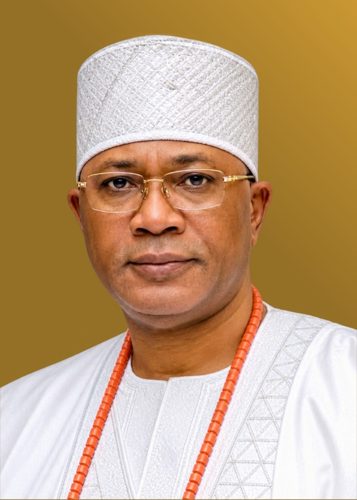
Otunba Francis Meshioye, OFR
Co-Chair
President, Manufacturers Association of Nigeria (MAN)
- Thematic Work Groups
- Workstreams
- IRWG Secretariat
- Lead institutions and officers
Five groups, each with a Chair and Vice-Chair drawn from the public and private sectors, working to terms of reference and reporting in plenary.
Standing teams that own a specific instrument. The Finance Workstream owns the National Industrial Finance Compact.
Anchored in the Office of the Honourable Minister of State for Industry. Coordinates technical, administrative and strategic work, keeps institutional memory and tracks every commitment.
Each commitment names an institution and a senior officer, confirmed in writing to the Secretariat.
Delivery
The Next Clocks: What the Work Group Will Deliver Over the Coming Year
-
Prove the Compact
Train the first cohort of credit-ready firms, issue the first guarantees and credit decisions, and report results by December 2026.
-
Widen the Finance Workstream
Bring in further institutions, including NIRSAL, and development finance partners prepared to co-fund structured programmes.
-
Replicate Idu
Treat the Idu Industrial District as the blueprint for cluster power and carry the model to the next industrial clusters.
-
Build a national MSME registry
Use data captured through credit readiness to support credit scoring, risk assessment and better targeted policy.
-
One monitoring architecture
A single framework to track every commitment made through the Work Group against the objectives of the Nigeria Industrial Policy.
-
Ministerial Roundtable III
Review the Compact in full and confront the next binding constraint with the same discipline.
Why Join: the IRWG is the one table where mandates meet markets
Membership is not a badge. It is a working seat at the table where Nigeria’s industrial constraints are named, owned and removed.
For Ministries, Departments and Agencies
-
Early sight of the constraints industry actually faces, before they become crises
-
A single point of coordination with peer agencies on shared problems
-
Private-sector partners to help deliver your own mandate
-
Shared credit for delivery in a public scorecard
For the organised private sector
-
A voice in policy and regulation before the rules are written
-
Direct engagement with the institutions that finance, regulate and buy
-
Formal standing as an inducted member under the Covenant for Industrial Execution
-
A peer network that spans value chains and states
For development partners and financiers
-
A credible, government-convened counterpart with named owners.
-
Vetted pipelines, such as credit-ready small and medium enterprises
-
Co-funding structures with clear metrics and 90-day reporting
-
Data and evidence that de-risk programme design
-
New private-sector members are inducted at a Technical Session through the Covenant for Industrial Execution, a public pledge administered by the Chair, and are entered in the Register of Members.
An engine room runs on more than conviction
The Work Group’s discipline has a cost. Every Technical Session and Roundtable, every evidence paper and every site visit is the work of a lean Secretariat that keeps more than thirty institutions to a single clock. Sustaining that rhythm, and raising it, depends on partners who see the Secretariat not as overhead but as infrastructure.
Join a Thematic Work Group
Nominate a senior lead officer to one of the five groups.
Co-convene a Session
Partner on a Technical Session or a Ministerial Roundtable.
Commission Research
Underwrite evidence papers, sector diagnostics and shared data.
Support Industrial Tours
Enable visits to clusters, factories and zones, at home and with peer economies.
Provide Expert Counsel
Second or fund technical, legal and financial structuring expertise.
Anchor a Delivery Initiative
Lead an instrument, sponsor a cohort or adopt a cluster.
-
Partnerships with the Secretariat are agreed in writing and acknowledged in IRWG materials. The Work Group gratefully acknowledges the Bank of Industry and Flour Mills of Nigeria, whose support made the 2026 Lagos convenings possible.
-
Send mail to IRWG@hmindustry.ng to discuss a partnership